
Overtime Calculator
Fareclock's overtime calculator applies your rate, threshold, and multiplier so the number is right every time
What Is a Overtime, and What Qualifies as Overtime?
Overtime is pay owed to an employee for hours worked beyond their standard schedule, usually at a higher rate than their base pay. It compensates people fairly for extra time on the clock and discourages employers from over-relying on unpaid extra hours.
What qualifies as overtime depends on your company policy, your state labor laws, and federal rules. This is why you should treat the categories below as a starting point, not a substitute for checking your local requirements.

Daily overtime
Extra pay kicks in after a set number of hours in a single day (for example, past 8 hours)

Weekly overtime
Extra pay kicks in after a set number of hours in a week (commonly 40)

Double time
A higher multiplier, often 2x, applied after an even higher threshold or on specific days

Exemptions
Certain roles or salary levels may not qualify for overtime under federal or state law
Because rules vary by jurisdiction and industry, always confirm your specific obligations with your state labor office or legal counsel before finalizing policy.
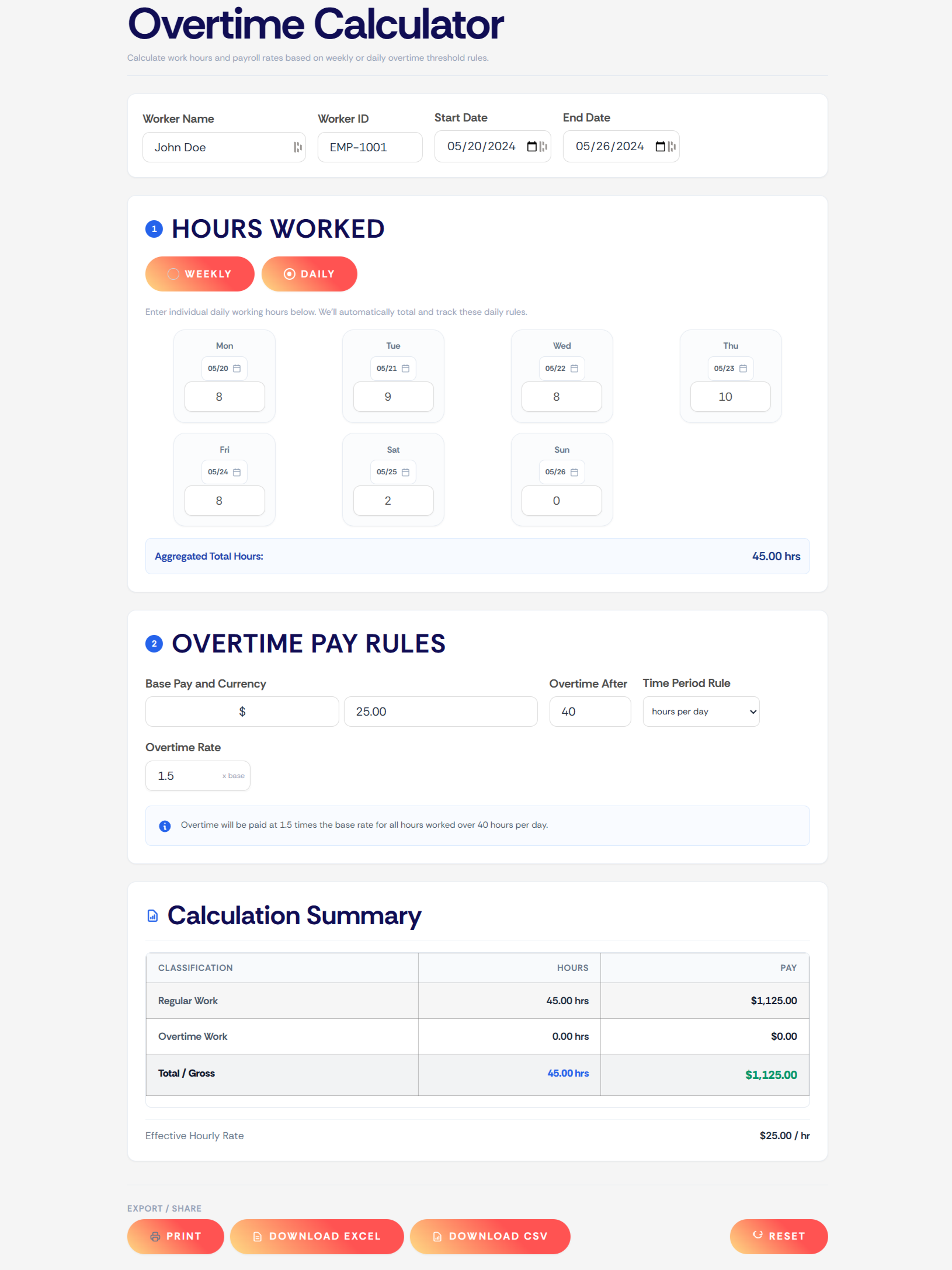
Overtime Calculator
Calculate work hours and payroll rates based on weekly or daily overtime threshold rules.
Hours Worked
Enter individual daily working hours below. We'll automatically total and track these daily rules.
Overtime Pay Rules
Overtime will be paid at 1.5 times the base rate for all hours worked over 40 hours per week.
Calculation Summary
| Classification | Hours | Pay |
|---|---|---|
| Regular Work | 40.00 hrs | $1,000.00 |
| Overtime Work | 5.00 hrs | $187.50 |
| Total / Gross | 45.00 hrs | $1,187.50 |
Action Completed
Success
Common Overtime Payroll Mistakes
Overtime math is simple in theory but messy in practice. The usual culprits include:


Using the wrong overtime rate

Failing to include overtime hours in the payroll calculation

Not paying employees for work performed before or after scheduled shifts

Skipping an audit of overtime hours before payroll processing, letting errors go unnoticed
Why Does Overtime Math Matter?
Getting overtime right goes beyond accurate paychecks:

- Estimate overtime costs before they surprise your budget
- Verify payroll against expected hours and rates
- Budget labor expenses with more confidence
- Reduce payroll mistakes that create rework and disputes
How to Use the Overtime Calculator
1 Enter Employee Information
- Worker Name
- Worker ID
- Start Date
- End Date
2 Choose How to Enter Hours
3 Enter Hours Worked
4 Set Overtime Rules
5 Review the Summary
6 Export Your Overtime Report
Reducing Overtime Payroll Mistakes

A few habits keep overtime errors from reaching payroll:
- Use an automated time-tracking system.
- Make sure employees eligible for overtime are identified correctly.
- Communicate when overtime is permitted and how it should be approved.
- Review timesheets before payroll runs.
- Automate overtime calculations instead of doing them by hand.
- Conduct regular payroll audits.
Need Overtime Calculated Automatically, Every Pay Period?
That's exactly what Fareclock does. As a leading attendance and workforce management platform for businesses of all sizes, Fareclock applies your overtime rules automatically so nothing gets missed at payroll time.